With the rise in sales of eBooks and the constantly evolving market for eReaders, the question has arisen whether the effect of technology will drive the printed book to extinction. I've posted about this before (Clouds in my Coffee) and I can't say I have any better answers, but it did make me wonder what the effect of audio books has been over the years and whether that looked as ominous as eBooks when it all started. Granted, they each hit slightly different market motivations, but what is the correlation?
My husband listens to a lot of audio books simply because it allows him to read more than he would otherwise. He listens while he's mowing the lawn, taking a shower, driving, and other less convenient places for paper books. He still buys paper books, especially those he wants to read again or keep as a resource. But for fun, popular fiction, he often goes the audio book route. Ultimately, I doubt he would ever really subscribe to the whole eBook deal simply because it would just be another way to read a paper book...involving hands and eyes.
So, why choose eBooks over paper? For the most part, I think people choose it for the weight factor, as well as convenience. Why lug around 60 pounds of literature when you can have your entire library at your finger tips for just 8.5 ounces? I know that's one reason so many agents and editors glommed on to the Kindle way back when. Are there other reasons?
Audio books certainly have their niche and they have provided literature for a wider audience who might not otherwise read paper books at all. They have also generated additional revenues for the publishing business. Will eBooks find that same kind of well-defined niche or will they supplant the printed word altogether?
I would love to know how many writers have an eReader, how many are thinking of getting one, and how many refuse to be traitors to tradition.
What are your thoughts on the issue? Please feel free to comment in detail.
Thursday, June 09, 2011


Wednesday, June 08, 2011
Learning: The Quintessential Survival Skill
I've been considering picking up some additional graduate work and the following is my response to a request for a writing sample. The topic was "the impact of three issues that challenge educators today." This will be the last of my rants on educational topics for a while...I promise.
As I stepped through the door into my own classroom at Heritage High School eighteen years ago, I brought my passel of ideals and my passion for literature with me and laid them right out for everyone to see. I had no doubt that these pieces of gold would inspire my students and generate a whirlwind of learning, no matter how disparate the learning styles or how severe the behavioral issues or anemic the student motivation. I had a mission. If only it were that simple. While I had the immeasurable support of my administration and confidence in my vision, it soon became clear that there was a lot more to being a teacher than teaching, talent, and good intentions. In college, no one really prepares you for the politics of teaching. By politics, I don’t mean the ideology of the superintendent or the social etiquette of the faculty lunch room. I mean the white noise that both student and teacher must endure to get the job done.
Working in a township school, I was prepared for some disparities in the socio-economic composition of the student body, but the most persistent motivational roadblock came not from the students themselves, but from their parents. Politicians argue about the accountability of the school districts for the quality of their children’s education, but one of the most damaging cultural attitudes that teachers must face is a devaluing of education by the already disenfranchised. In this particular community, many of the parents had never finished high school, let alone gone on to college. They were farmers or factory workers who saw school as a necessary evil. Other families may be broken, one-parent homes relying on school to babysit their children while the parent worked two or three jobs just to make ends meet and avoid welfare. The frustration, exhaustion, and formative experiences of the parents translated to a mistrust of school as an institution and even an adversarial relationship with education itself, an attitude which was ultimately inherited by their children. They did not see education as an opportunity, but rather as just another yard stick with which to measure their deficiencies. It is difficult to help these students (and their parents) see the value of learning for its own sake, but that is part of our mission.
As our economy struggles, the divide between the haves and the have-nots grows and so does this attitude that education is not for everyone. Lack of equity in the distribution of resources has always been an issue. Some school systems simply do not have the same access to funding or the most modern resources essential to educational growth. And with the lightning pace of technological advances, many schools cannot keep up, which again pits the more affluent communities against the poorer communities and the politicians get to decide who gets funding based on academic performance rather than need. Their altruistic but misguided answer is No Child Left Behind legislation that is intended to hold public schools accountable for sloppy standards, bad teaching, and poor programming. However good its intentions, NCLB is in large part perpetuating some of the most pervasive problems as it widens the gap and confirms those old prejudices against education. It has created a “teach to the test” mentality in many school systems that are terrified of losing their funding or being labeled as “the bad school” and abandoned by anyone with the means to transfer their child to a “choice” school. Administrators have begun to pressure, and in some cases bully, their faculty into using a canned pedagogy that may encourage a stronger performance on the test but that will surely hinder true learning, which is whole the point of education. Jobs are threatened, innovation is stifled, and whole populations are ignored in the name of that sacred test score. Sadly, NCLB is now a significant part of the problem instead of the solution.
Solid, veteran teachers will continue to inspire their students and help them learn, but in some ways their efforts may be hobbled by politics. First year teachers do not have the experience to help them discern where an appropriate line can be drawn between content and learning so they rely on their administration and their mentors. Moreover, the efficacy of the assessment is only as good as the instrument, and we have plenty of research that demonstrates the biases and limitations inherent in many standardized tests. So where does this leave ESL students and students with learning disabilities and other special needs? With the ever growing diagnoses of children with ADD, ADHD, and Asperger’s Syndrome, as well as other issues that affect learning, the current trend in response to NCLB is to make few accommodations while forcing them to participate in this flawed evaluation process. There is no specific measurement of their growth as a subset of the population. Through my own teaching experience, I saw the number of students with these issues in my classroom grow year by year. Some of these students had early intervention, but many went undiagnosed or unserved for years. In addition, the influx of non-English speaking immigrants is disproportionate across regions, yet these students are introduced to our classrooms, often with little support depending upon the availability of funds and programs, and included in our standardized testing which will impact that carefully guarded average that represents “adequate yearly progress” and subsequent NCLB approval.
Teaching has always been a challenging vocation and certainly not a profession for the weak-hearted. Education, however, is the backbone of any society and no matter what the political climate or the changing demographics or the gap in generational attitudes, learning is the essential point. A student cannot effectively acquire content knowledge unless he learns how to learn first. At its very core, learning is a survival skill, one that needs to be nurtured and fed and practiced throughout life. Good teachers lead their students onward through the white noise and help them develop the most crucial competency they will ever master—the ability to learn.
Monday, June 06, 2011
Fast Food Education?
Caution: The following post may rant, rave, or otherwise inflict strong opinions upon the reader.
The week before I graduated from college, looking forward to working on my Master's degree and beginning a career as a teacher, I was treated to dinner out with my parents. Though I embraced my calling whole-heartedly, graduation still brought out the jitters and uncertainty of my impending "adult" life. My parents apparently felt it their duty to add to the butterflies in my stomach by choosing that night to question my plans and denigrate what I thought of as a noble and intellectually fulfilling field of work. They wanted me to be a lawyer or even a doctor, not a teacher. Teaching would be an abominable waste of my talents.
As I sat there with my jaw hanging open and my stomach in knots, two things came to me. First, I realized that my parents had no idea who I really was or what talents I possessed. Second, I realized that these two people, with their college degrees and their white-collar jobs had already forgotten who had led them to that place of success and who had prepared the daughter sitting in front of them go out and blaze her own trail and quit sponging off them. They may believe both their own success and my impending launch into independence was all of their own making, but anyone who knows my family dynamics would laugh out loud at either supposition. By some miracle, I left their doubts and denigration in the dust and pursued my own dream anyway. After 20 years of teaching, raising my own children, and writing, I wouldn't change a thing.
Sadly, my parents' cynical and demeaning attitude towards teaching continues to infect our culture and ultimately tear down the once high standards and respect that used to be and should always be associated with teachers. This morning, I saw this story on the Today Show:
Believe me, I know what it is to face such malice, and what makes it worse is this infuriating notion that because we teach "children" we are no longer human beings with the right to protect our own safety. I emphasize the word "children" because it's obvious that high school students like the one in the video are not those helpless, wide-eyed little creatures we like to think of when we say that word. This guy was physically a man. At 5'2 and 100 lbs, I certainly would have felt threatened. In fact, our 6'1 male band director was assaulted by a student with a hammer and sent to the hospital one year. Another was jumped by 3 male students after school and beaten severely...all because one of the boys was told to spit out his gum 3 times before he was sent to the hall for mouthing off.
What struck me most about Mrs. Hadsock's plight was this general attitude about teaching in the United States. Have we become no more than babysitters? Are we simply custodians or surrogate disciplinarians for parents who don't have the time or inclination to actually raise the children they spawn for whatever reason? (modifier purposely ambiguous there). If a kid acts out to the point that he endangers someone else's safety, why does a teacher get both blamed for the kid's actions and punished for protecting herself and her students? A student does not get a "get out jail free" card just because he is chronological still considered a kid, nor do the parents.
Our government has passed laws that require us to educate our children to a certain age to protect those children from the kind of industrial age slave labor and mistreatment we can find in any Charles Dickens novel. Why? Because we should care that our children grow up healthy, happy, and educated and become responsible adults who continue to make our country financially, politically, and morally strong. Otherwise, why not leave them in the sweat shops and blacking factories and corn fields?
I chose to teach because I love literature, learning, and writing. But even more, there is a certain magic that happens when a kid discovers something new, both for the kid and for the teacher. It's a physical sensation as much as it is an intellectual one. That tingle that makes you feel strong and smart and capable of anything. It's intoxicating and completely addictive. What's more, I know how priceless the ability to learn is and what teachers sacrifice to share that with their students.
Teaching is not a cushy job that gives you lots of holidays and the summers off. Most of us work practically non-stop. A teacher never stops looking for inspiration, for those little connections that may spark magic in the classroom. We think about ways to reach our students even in our sleep. Never mind all the grading and paperwork and preparation we have to do. We come to our mission with awe for the sheer impact it can have on a single life. But for a growing number of parents and kids, teachers are like those frozen burritos you can buy 4 for a dollar at the Quick-E-Mart: cheap, convenient, and filling the most basic purpose. There is no respect, no sense of honor, no reverence for the deliverer of the most crucial survival skill a kid can master—learning.
I know there are some lemon teachers out there, more and more every year precisely because of this attitude. We give education majors more hoops to jump through instead of higher standards and greater inspiration. We demand our teachers teach to a flawed test instead of teach our kids how to learn. We lower our standards so we can raise our numbers. It's no wonder this generation is filled with a false sense of entitlement and false self-esteem. It's all based on nothing. Their advancement, their diploma, their sense of self-worth. Show up and get a medal. Actual participation is optional.
To Mrs. Hadsock, I say thank you for caring, thank you for inspiring, thank you for demanding that you get the respect you deserve. For those who consider teachers to be nothing more than convenience food, shame on you.
The week before I graduated from college, looking forward to working on my Master's degree and beginning a career as a teacher, I was treated to dinner out with my parents. Though I embraced my calling whole-heartedly, graduation still brought out the jitters and uncertainty of my impending "adult" life. My parents apparently felt it their duty to add to the butterflies in my stomach by choosing that night to question my plans and denigrate what I thought of as a noble and intellectually fulfilling field of work. They wanted me to be a lawyer or even a doctor, not a teacher. Teaching would be an abominable waste of my talents.
As I sat there with my jaw hanging open and my stomach in knots, two things came to me. First, I realized that my parents had no idea who I really was or what talents I possessed. Second, I realized that these two people, with their college degrees and their white-collar jobs had already forgotten who had led them to that place of success and who had prepared the daughter sitting in front of them go out and blaze her own trail and quit sponging off them. They may believe both their own success and my impending launch into independence was all of their own making, but anyone who knows my family dynamics would laugh out loud at either supposition. By some miracle, I left their doubts and denigration in the dust and pursued my own dream anyway. After 20 years of teaching, raising my own children, and writing, I wouldn't change a thing.
Sadly, my parents' cynical and demeaning attitude towards teaching continues to infect our culture and ultimately tear down the once high standards and respect that used to be and should always be associated with teachers. This morning, I saw this story on the Today Show:
Believe me, I know what it is to face such malice, and what makes it worse is this infuriating notion that because we teach "children" we are no longer human beings with the right to protect our own safety. I emphasize the word "children" because it's obvious that high school students like the one in the video are not those helpless, wide-eyed little creatures we like to think of when we say that word. This guy was physically a man. At 5'2 and 100 lbs, I certainly would have felt threatened. In fact, our 6'1 male band director was assaulted by a student with a hammer and sent to the hospital one year. Another was jumped by 3 male students after school and beaten severely...all because one of the boys was told to spit out his gum 3 times before he was sent to the hall for mouthing off.
What struck me most about Mrs. Hadsock's plight was this general attitude about teaching in the United States. Have we become no more than babysitters? Are we simply custodians or surrogate disciplinarians for parents who don't have the time or inclination to actually raise the children they spawn for whatever reason? (modifier purposely ambiguous there). If a kid acts out to the point that he endangers someone else's safety, why does a teacher get both blamed for the kid's actions and punished for protecting herself and her students? A student does not get a "get out jail free" card just because he is chronological still considered a kid, nor do the parents.
Our government has passed laws that require us to educate our children to a certain age to protect those children from the kind of industrial age slave labor and mistreatment we can find in any Charles Dickens novel. Why? Because we should care that our children grow up healthy, happy, and educated and become responsible adults who continue to make our country financially, politically, and morally strong. Otherwise, why not leave them in the sweat shops and blacking factories and corn fields?
I chose to teach because I love literature, learning, and writing. But even more, there is a certain magic that happens when a kid discovers something new, both for the kid and for the teacher. It's a physical sensation as much as it is an intellectual one. That tingle that makes you feel strong and smart and capable of anything. It's intoxicating and completely addictive. What's more, I know how priceless the ability to learn is and what teachers sacrifice to share that with their students.
Teaching is not a cushy job that gives you lots of holidays and the summers off. Most of us work practically non-stop. A teacher never stops looking for inspiration, for those little connections that may spark magic in the classroom. We think about ways to reach our students even in our sleep. Never mind all the grading and paperwork and preparation we have to do. We come to our mission with awe for the sheer impact it can have on a single life. But for a growing number of parents and kids, teachers are like those frozen burritos you can buy 4 for a dollar at the Quick-E-Mart: cheap, convenient, and filling the most basic purpose. There is no respect, no sense of honor, no reverence for the deliverer of the most crucial survival skill a kid can master—learning.
I know there are some lemon teachers out there, more and more every year precisely because of this attitude. We give education majors more hoops to jump through instead of higher standards and greater inspiration. We demand our teachers teach to a flawed test instead of teach our kids how to learn. We lower our standards so we can raise our numbers. It's no wonder this generation is filled with a false sense of entitlement and false self-esteem. It's all based on nothing. Their advancement, their diploma, their sense of self-worth. Show up and get a medal. Actual participation is optional.
To Mrs. Hadsock, I say thank you for caring, thank you for inspiring, thank you for demanding that you get the respect you deserve. For those who consider teachers to be nothing more than convenience food, shame on you.
Tuesday, May 10, 2011
Fear and Loathing
I just read a writer-friend's post on The Abyss of Suckitude and she has nailed some things right on the head. Maybe it's the artistic temperament, but I think we all go through some version of what she describes. It got me thinking about this last year of writing...and not writing...and why I've been in such a funk. I'm working on my third YA novel, now, and each one has been a different experience.
My first story was in many ways a catharsis for me. It was a taking back of things in my childhood that had been so rudely stolen by the dysfunction of my family. I know. There is dysfunction in all families. But trust me when I say mine is pretty royally screwed up. So, I took things from my MC and forced her to grow up and confront her own guilt and longing. Catharsis. (not necessarily "writing") I don't know if I'll ever publish it, but I will treasure it.
My second novel was a journey. I learned where my writing could go and gained more confidence in it. I crafted and molded and dug deep. I met characters who refuse to leave me even now, refuse to be quiet while I try to move on. They are still waiting for their day in the sun. I have to believe they will find it when they are truly ready. Or at least, when the world is ready for them.
Novel #3 is a whole new experience. In some ways, I'm afraid of it. I have big plans for it...maybe too big. That is part of the problem. What if I choke? What if in the end, I truly deeply suck? There is only so long I can blame the upheaval that has been the last three years of my life for hindering my writing. Now I need to take charge and make it happen. What if I can't do it? There are people I don't want to disappoint, including me. What if I only think I can write? Am I kidding myself? If that kind of doubt isn't enough, the next step is to pick apart my draft and search for every fault just so I can beat myself in the head with it. How many good writers do that? I have almost managed to convince myself that all good writers to that.
But somewhere deep down, there is this odd little person who thinks she can really write. Who believes she has some fascinating stories to tell. And behind that funny little person is a host of characters all waiting to be heard. Waiting to be discovered. Waiting to change someone's life, even if it just means they live in someone else's head (or heart) for a short time.
I've taken my share of rejection and handled it. I don't blame my crappy childhood for my adult failures (mostly). If anything, I might have to give thanks for it. The store of emotions and experiences I have to play with is vast and oh so interesting. I've learned to kick myself harder than anyone else can just to stay ahead of things and that's not always bad. What doesn't kill us makes us better writers, right?
And then I find those bits of gold that remind me why I write. Those same gilded clubs I beat myself with are what make me a writer. They are voices that won't be silenced. The moments of crystalline brilliance that I cannot be afraid to own. The little morsels of humanity that force us into a kind of intimacy with ourselves that only books can bring—both in the writing and in the reading.
So I'm going to kick my fear and self-loathing in the butt and write a stunning YA novel. You know that saying: Courage is not the absence of fear, but rather the judgement that something else is more important than fear. ~Ambrose Redmoon
I think I have found just enough in my writing to make that judgement.
My first story was in many ways a catharsis for me. It was a taking back of things in my childhood that had been so rudely stolen by the dysfunction of my family. I know. There is dysfunction in all families. But trust me when I say mine is pretty royally screwed up. So, I took things from my MC and forced her to grow up and confront her own guilt and longing. Catharsis. (not necessarily "writing") I don't know if I'll ever publish it, but I will treasure it.
My second novel was a journey. I learned where my writing could go and gained more confidence in it. I crafted and molded and dug deep. I met characters who refuse to leave me even now, refuse to be quiet while I try to move on. They are still waiting for their day in the sun. I have to believe they will find it when they are truly ready. Or at least, when the world is ready for them.
Novel #3 is a whole new experience. In some ways, I'm afraid of it. I have big plans for it...maybe too big. That is part of the problem. What if I choke? What if in the end, I truly deeply suck? There is only so long I can blame the upheaval that has been the last three years of my life for hindering my writing. Now I need to take charge and make it happen. What if I can't do it? There are people I don't want to disappoint, including me. What if I only think I can write? Am I kidding myself? If that kind of doubt isn't enough, the next step is to pick apart my draft and search for every fault just so I can beat myself in the head with it. How many good writers do that? I have almost managed to convince myself that all good writers to that.
But somewhere deep down, there is this odd little person who thinks she can really write. Who believes she has some fascinating stories to tell. And behind that funny little person is a host of characters all waiting to be heard. Waiting to be discovered. Waiting to change someone's life, even if it just means they live in someone else's head (or heart) for a short time.
I've taken my share of rejection and handled it. I don't blame my crappy childhood for my adult failures (mostly). If anything, I might have to give thanks for it. The store of emotions and experiences I have to play with is vast and oh so interesting. I've learned to kick myself harder than anyone else can just to stay ahead of things and that's not always bad. What doesn't kill us makes us better writers, right?
And then I find those bits of gold that remind me why I write. Those same gilded clubs I beat myself with are what make me a writer. They are voices that won't be silenced. The moments of crystalline brilliance that I cannot be afraid to own. The little morsels of humanity that force us into a kind of intimacy with ourselves that only books can bring—both in the writing and in the reading.
So I'm going to kick my fear and self-loathing in the butt and write a stunning YA novel. You know that saying: Courage is not the absence of fear, but rather the judgement that something else is more important than fear. ~Ambrose Redmoon
I think I have found just enough in my writing to make that judgement.
Monday, April 18, 2011
Will Technology De-value Our Books?
As I was thumbing through my usual blog quest and twitter scan today, dystopian visions of a Brave New World sort began to cloud my writerly fantasies of what the future will hold not only for me and my books, but for books in general. Several cyber acquaintances are exploring the ramifications of the electronic world of publishing. I'm not pronouncing the end of literary days or anything, but I do wonder. No matter what lay ahead in technology, story telling and books will endure, but will they hold the same value? Or will it simply become our dose of soma, minus the euphoria? Something to maintain the status quo, fill a void but only with white noise?
Nathan Bransford's post looks at the economic philosophies that drive market evolution and applies them to the publishing world, namely to the bargain ebook phenomenon. While his post is hopeful, it does leave me wondering if books will be as valuable to our grandchildren as they are to us. I won't rehash the whole doomsday prediction of the end of paper books, but as technology takes us in a new direction, will books become no more than a disposable blip on the kindle/ipad/computer screen? I tend to agree with Nathan that quality will always find its way out and the everyman march to mediocre is a myth. (I pray!)
I admit—I'm a book junky. I hoard them, spend money I don't have on them, stockpile more than I can possibly read, and lie there and inhale the sent of paper and ink and glue as if it were crack. I pet their tattered bindings and talk to them when we're alone. Kind of pathetic, I know. But to me, books are not only my drug, they are my religion, my family, my consolation.
Okay, so ebooks are going to take over the world and relegate print matter to back room "read-easies" or the Antiques Road Show or the antiquities section of the Smithsonian along with the mummies and the salvaged remains of the Titannic. Let's say that ebooks do balance the market out and maintain the integrity of good reading. What happens to those oh-so-precious-and-valuable signed editions?
Someone has thought of that. Autography will allow an author to sign her ebook for a fan and digitize that personal touch for posterity. (Pardon the ironic smile) So...what will a signed electronic edition of J.K. Rowling's next book be worth in 50 years? Will electronic signatures be pirated and distributed en masse with a single click? What would an e-signature be worth, then? How is it authenticated? Or does that point simply become moot because that sense of iconic wonder, of religious fervor, of hero-worshipping awe has simply faded away into the everyday blip of silicon-induced complacency?
I wonder...
Nathan Bransford's post looks at the economic philosophies that drive market evolution and applies them to the publishing world, namely to the bargain ebook phenomenon. While his post is hopeful, it does leave me wondering if books will be as valuable to our grandchildren as they are to us. I won't rehash the whole doomsday prediction of the end of paper books, but as technology takes us in a new direction, will books become no more than a disposable blip on the kindle/ipad/computer screen? I tend to agree with Nathan that quality will always find its way out and the everyman march to mediocre is a myth. (I pray!)
I admit—I'm a book junky. I hoard them, spend money I don't have on them, stockpile more than I can possibly read, and lie there and inhale the sent of paper and ink and glue as if it were crack. I pet their tattered bindings and talk to them when we're alone. Kind of pathetic, I know. But to me, books are not only my drug, they are my religion, my family, my consolation.
Okay, so ebooks are going to take over the world and relegate print matter to back room "read-easies" or the Antiques Road Show or the antiquities section of the Smithsonian along with the mummies and the salvaged remains of the Titannic. Let's say that ebooks do balance the market out and maintain the integrity of good reading. What happens to those oh-so-precious-and-valuable signed editions?
Someone has thought of that. Autography will allow an author to sign her ebook for a fan and digitize that personal touch for posterity. (Pardon the ironic smile) So...what will a signed electronic edition of J.K. Rowling's next book be worth in 50 years? Will electronic signatures be pirated and distributed en masse with a single click? What would an e-signature be worth, then? How is it authenticated? Or does that point simply become moot because that sense of iconic wonder, of religious fervor, of hero-worshipping awe has simply faded away into the everyday blip of silicon-induced complacency?
I wonder...
Tuesday, April 05, 2011
Gold Star to Nathan Bransford
Just a short post. If you are a writer and you don't follow Nathan Bransford, you should. Today he posted a particularly salient piece, given a few recent meltdowns in cyberspace, that reminds us that the artistic temperament and the speed-of-light conduit of information that is the internet often do not mix well.
Miscellaneous Madness
Butler made it to the finals and almost took the championship, tragedies both small and large changed my path more than once, and writing goals took on new meaning over those 31 raging spring days.
Thank you to the March Madness crew and all those who participated for keeping me motivated and inspired. I didn't quite reach my goal, but I gained momentum that will surely kick some April butt.
The biggest event of the month continues to haunt us as Japan struggles with the devastation and potential radiation contamination wrought by the earthquake and tsunami on March 11th. I continue to get news from friends and acquaintances as I pray for healing and grace for everyone effected by this event. If you wish to help, Charity Watchdog has compiled a list and some general information about organizations committed to helping Japan.
As for a small tragedy, my dear daughter unexpectedly lost her bunny last week. Can you remember that first pet that was really yours, that you gave your whole heart to and spoiled with affection every day? This was hers. Aptly named "Angel," that little rabbit loved the attention and gave Ghost Daughter so much in return. The most heart-wrenching part of it all is that Angel died basically in our girl's lap. She was moving and content one minute and the next, dead. Our poor girl brought this lifeless body to her daddy and asked, "Is she dead?" After mourning and keening for a day, and a lovely funeral, Angel was laid to rest. A heart attack is the most likely culprit. The first weekend of April brought a 4-hour drive North to a breeder where we adopted Angel Jr. and started a new journey, Ghost Daughter, me, and the bunny.
And the writing goals? Well I added more than 10k to my WIP, had a few plot/character epiphanies, and kicked up the pace, so the madness led to at least a more focused method. It's odd, though, how life can show me such unexpected moments of despair and supreme grace that not only give me perspective on reality, but inspire me to want to capture it in a place where we so often go to escape—writing. The more real it is, the deeper the catharsis.
Perhaps that is just too much philosophizing for a Tuesday...
Thank you to the March Madness crew and all those who participated for keeping me motivated and inspired. I didn't quite reach my goal, but I gained momentum that will surely kick some April butt.
The biggest event of the month continues to haunt us as Japan struggles with the devastation and potential radiation contamination wrought by the earthquake and tsunami on March 11th. I continue to get news from friends and acquaintances as I pray for healing and grace for everyone effected by this event. If you wish to help, Charity Watchdog has compiled a list and some general information about organizations committed to helping Japan.
As for a small tragedy, my dear daughter unexpectedly lost her bunny last week. Can you remember that first pet that was really yours, that you gave your whole heart to and spoiled with affection every day? This was hers. Aptly named "Angel," that little rabbit loved the attention and gave Ghost Daughter so much in return. The most heart-wrenching part of it all is that Angel died basically in our girl's lap. She was moving and content one minute and the next, dead. Our poor girl brought this lifeless body to her daddy and asked, "Is she dead?" After mourning and keening for a day, and a lovely funeral, Angel was laid to rest. A heart attack is the most likely culprit. The first weekend of April brought a 4-hour drive North to a breeder where we adopted Angel Jr. and started a new journey, Ghost Daughter, me, and the bunny.


And the writing goals? Well I added more than 10k to my WIP, had a few plot/character epiphanies, and kicked up the pace, so the madness led to at least a more focused method. It's odd, though, how life can show me such unexpected moments of despair and supreme grace that not only give me perspective on reality, but inspire me to want to capture it in a place where we so often go to escape—writing. The more real it is, the deeper the catharsis.
Perhaps that is just too much philosophizing for a Tuesday...
Sunday, April 03, 2011
Project 365
March flew by far too fast, but I will take some time to reflect and blog about the madness in a bit. (A good kind of crazy!) But today marks the 18th anniversary of the day Ghost Hunk and I said our vows and promised to love each other forever. A woman asked me how we managed 18 years. The simple answer is, make love an action and keep doing it every day.
To celebrate, and because blogger pal Just Mom inspired me, I'm going to take a photo a day for the next 365 days and post it on my photo blog. Why not here? I want to keep this place tidy for my writing ranting and reflection. But perhaps I just build another Blogger site for the project. We'll see.
In the meantime, off I go to year #19!
To celebrate, and because blogger pal Just Mom inspired me, I'm going to take a photo a day for the next 365 days and post it on my photo blog. Why not here? I want to keep this place tidy for my writing ranting and reflection. But perhaps I just build another Blogger site for the project. We'll see.
In the meantime, off I go to year #19!
Tuesday, March 08, 2011
March Madness and Spring Break...(sort of)
Well in southwest Georgia, Spring has arrived. I gripe a lot about living here, but this is one lovely perk...spring in February. But March has somehow hopped right in here and I have a lot to get done. So I will definitely be a mad hare as I dash through my WIP (ha ha) and get it ready for my awesome agent. I wish I could guarantee that my WIP will be so awesome, but it's a first draft and a bolder project than the last.
To keep me on the right track, I'm following a fabulous group of writers who are blogging to inspire. Join me as I check in all month:
Denise Jaden (Mondays)
Shana Silver (Tuesdays)
Angelina Hansen (Wednesdays)
Shari Green (Thursdays)
Craig Pirrall (Fridays)
*I've been told there will be prizes as well as inspiration!
To keep me on the right track, I'm following a fabulous group of writers who are blogging to inspire. Join me as I check in all month:
Denise Jaden (Mondays)
Shana Silver (Tuesdays)
Angelina Hansen (Wednesdays)
Shari Green (Thursdays)
Craig Pirrall (Fridays)
*I've been told there will be prizes as well as inspiration!
Friday, February 18, 2011
Drawing conclusions... and a contest!
Check out the interview with Ruth McNally Barshaw, author/illustrator of the ELLIE MCDOODLE series for young readers, over on the MIXED UP FILES OF MIDDLE-GRADE AUTHORS blog.
Sketches and doodles are a fun trend in MG books, and one that my kids can really relate to. Ghost Daughter comes home everyday with a notebook full of adventures and commentary. I can hardly keep the kid in paper!
Sketches and doodles are a fun trend in MG books, and one that my kids can really relate to. Ghost Daughter comes home everyday with a notebook full of adventures and commentary. I can hardly keep the kid in paper!
Sunday, February 13, 2011
Tattoo Me...Please!
Is it a mid-life crisis thing? Or perhaps a need to rebel? Or maybe just an urge to take control of some small part of my bod? For whatever reason, I've been aching to get a tattoo. The big question is, what do I want to etch into my ivory skin forever? Of course a nice little celtic design would graft my love of Ireland to my shoulder for all eternity. Maybe a spunky little fairy. Of course horses are another passion, but I'm not sure I want just a horse-shaped stamped on my shoulder blade unless it's something really interesting. What about something literary? I considered a wonderful "I solemnly swear that I am up to no good" or something like that, but I think an iconic image would be more up my alley for this purpose. Or maybe something ghosty.
Here's the gig:
Here's the gig:
- I need a great idea.
- It has to be small. I don't want it to swarm across my back. Just a small little accent on my shoulder blade.
- It can be color or monochrome
- I'm asking my blogging buddies for help...HELP!
If you have a suggestion, post it in the comments along with a link to the image. OR email me with your suggestion and paste the image right in the email. I'm open to original work by any of my illustrator buddies as well.
Hit me with your best!
Wednesday, January 26, 2011
Obligatory Morals...
Apparently HARPER COLLINS has added some new language to their contracts:
There is quite a wave of response to this in the blogsphere, including the an initial posting from Richard Curtis (quoted above), a spicy offering from Ursula Leguin, and a fun romp from Jock Stewart. Steve Laube offers a somewhat different take, citing the standard MO of Christian Book publishers.
While I ruminate...what do you all think?
New language in the termination provision of the Harper’s boilerplate gives them the right to cancel a contract if “Author’s conduct evidences a lack of due regard for public conventions and morals, or if Author commits a crime or any other act that will tend to bring Author into serious contempt, and such behavior would materially damage the Work’s reputation or sales.” The consequences? Harper can terminate your book deal. Not only that, you’ll have to repay your advance. Harper may also avail itself of “other legal remedies” against you.
There is quite a wave of response to this in the blogsphere, including the an initial posting from Richard Curtis (quoted above), a spicy offering from Ursula Leguin, and a fun romp from Jock Stewart. Steve Laube offers a somewhat different take, citing the standard MO of Christian Book publishers.
While I ruminate...what do you all think?
Saturday, January 08, 2011
Huck's Audience
With all the flurry over the recent attempt to sanitize THE ADVENTURES OF HUCKLEBERRY FINN for young audiences, one important element of the question seems to have gotten lost. Who was the intended audience? For that matter, consider the newly released film version of Jonathan Swift's GULLIVER'S TRAVELS. It is being marketed as a fun "family" film, but Swift's work was carefully crafted political satire aimed at adults.
Now look closely at Twain's book. Consider when he wrote it, not only in terms of the historical time period but also in terms of the stage of Twain's own life. Though he may have envisioned a boy's adventure book when he began writing it, his novel became something very different by the end. The end of Reconstruction, the introduction of Jim Crow, and a flood of lynchings as well as personal tragedy led Twain to put the half-finished manuscript on the shelf for seven years before he finally picked it back up. And when he did, he came at the novel from a very different place. There is far more darkness in his tale than today's young people would understand. Does that mean they shouldn't read it? No.
However, it does mean that we should treat it as what it is. This book has been a point of contention on school reading lists for decades primarily because of the language, yet teachers want to share this eloquent indictment of Southern Honor and Post-Reconstruction realities with students of all ages. Why? What abiding truth resonates with the young reader? I think the problem is that many teachers don't really answer that question, if they ask it all all, before they plunge in with a group of unsuspecting 8th-graders. Does a popsicle-stick raft really demonstrate an important theme in the book?
I'm not saying we shouldn't include this in our school reading list or ban people from teaching it. I'm just saying don't be careless with it because you think it was meant for kids to read and learn a lesson about racism and don't let a sanitized version of the text lure you into a complacence that fails to address the true issues in the book. An adolescent main character does not always mean a book was written for kids. Is THE LOVELY BONES a book for young readers?
You can look around and find a host of classics that have been turned into graphic novels or abbreviated versions for young readers and that is not a bad thing. We teach books written for adults all the time. But if you wish to teach a book like HUCK FINN, don't assume that because one offensive word has been extracted or painted a different color that it is somehow more relevant or more acceptable to a young audience.
Kids can learn a lot from HUCK FINN. Don't boil it down to a single word and don't assume that it was written for kids. Think about those abiding truths you want your students to glean and start there. After all, if we want them to learn how to think about the hard questions, we have to be good models and ask them ourselves.
Now look closely at Twain's book. Consider when he wrote it, not only in terms of the historical time period but also in terms of the stage of Twain's own life. Though he may have envisioned a boy's adventure book when he began writing it, his novel became something very different by the end. The end of Reconstruction, the introduction of Jim Crow, and a flood of lynchings as well as personal tragedy led Twain to put the half-finished manuscript on the shelf for seven years before he finally picked it back up. And when he did, he came at the novel from a very different place. There is far more darkness in his tale than today's young people would understand. Does that mean they shouldn't read it? No.
However, it does mean that we should treat it as what it is. This book has been a point of contention on school reading lists for decades primarily because of the language, yet teachers want to share this eloquent indictment of Southern Honor and Post-Reconstruction realities with students of all ages. Why? What abiding truth resonates with the young reader? I think the problem is that many teachers don't really answer that question, if they ask it all all, before they plunge in with a group of unsuspecting 8th-graders. Does a popsicle-stick raft really demonstrate an important theme in the book?
I'm not saying we shouldn't include this in our school reading list or ban people from teaching it. I'm just saying don't be careless with it because you think it was meant for kids to read and learn a lesson about racism and don't let a sanitized version of the text lure you into a complacence that fails to address the true issues in the book. An adolescent main character does not always mean a book was written for kids. Is THE LOVELY BONES a book for young readers?
You can look around and find a host of classics that have been turned into graphic novels or abbreviated versions for young readers and that is not a bad thing. We teach books written for adults all the time. But if you wish to teach a book like HUCK FINN, don't assume that because one offensive word has been extracted or painted a different color that it is somehow more relevant or more acceptable to a young audience.
Kids can learn a lot from HUCK FINN. Don't boil it down to a single word and don't assume that it was written for kids. Think about those abiding truths you want your students to glean and start there. After all, if we want them to learn how to think about the hard questions, we have to be good models and ask them ourselves.
Thursday, January 06, 2011
"Light Out, Huck, They Still Want to Sivilize You"
Yes, it's time for another round of literary sanitation in the name of political correctness. If you haven't heard, an English professor at Auburn University is protecting us from ourselves in order to preserve a classic for generations to come. How does he plan to do that? He has replaced the word nigger with the word slave in THE ADVENTURES OF HUCKLEBERRY FINN. All 243 times it appears. His hope is to make the book more palatable and less taboo to parents, teachers, and young readers alike in order to preserve a classic.
While I understand his aim, I have mixed emotions about the ramifications of such a cleansing. My guts tightened and my brain shuddered when I heard the news. Who would dare? But I'm sure many teachers have grown weary of explaining and testing the cultural climate before attempting to teach the text and have abandoned it altogether in the name of job security. It's a delicate business and believe me, I understand. But there is something more to this issue beside censorship and the political conscience of a modern audience. For me, it's as simple as integrity.
I taught HUCKELBERRY FINN in the 90's and my students truly "got" it. Now, keep in mind, I didn't just fling the book at them and dive into it without any context. That would be ludicrous. But then teaching any classic without context is not only asinine, but borderline criminal. In his New York Times article, Michiko Kakutani sums up a crucial point here:
I was teaching high school juniors at the time, and when I announced our next project, several sighed and said, "We already read that in 8th grade." These were gifted students, mind you, and they had little tolerance for repetition let alone something that has been dubbed a "kid's adventure story." Yes, that is how it was presented to them the first time around.[shudder] Of course I set them straight and then presented the historical and cultural context, complete with disclaimers about language. Also consider that the demographics of this school were 49% caucasian, 48% African American, and 3% other (Indian, Iranian, etc.) Moreover, the socio-economic scale reached from the poorest to the wealthiest (children of pro football players and heart surgeons, etc.) who made their own cliques to often surprising ends. When we had finished, several students remarked that they had read a completely different book. They had no idea that that is what the book was about. They loved it and each one of them took in the truth that they found there.
Prof. Gribben hopes to introduce more young people to Huck by sterilizing part of the very social comment that Twain was addressing. Of course we have seen the term pass through different usages and through its evolution, we have cringed and cursed at the sound of it. But what is really at the heart of good literature? Truth. No matter how ugly, uncomfortable, or embarrassing, if we seek it earnestly, we shall find it. As teachers, isn't that a large part of our job, to help our students discover their understanding of the world and its naked truth?
The primary problem is not the text. The problem is that so many teachers get it wrong. If you think that boiling down a social commentary like HUCKLEBERRY FINN to nothing more than a jaunt on the Mississippi, than you should not be teaching it to anyone. The rich, beautiful, harsh story says so much about Twain's understanding of a country that had just come through a firestorm, not unscathed, not instantly wiser, and certainly not romantically mussed up, but truly, brutally scarred. This isn't a book about friendship and acceptance. This is a book about honor and truth and clarity. Where is the honor and truth and clarity in eviscerating the text and subjugating the context?
In the end, Huck doesn't necessarily see all slaves as equals, but he does see Jim as a man—an honorable, brave man—and a friend. Mark Twain simply asked that we look at him, that we look at ourselves, that we see this country as it was, warts and all and consider the truth. Don't look away now because it makes you uncomfortable. You'll miss the most important parts.
While I understand his aim, I have mixed emotions about the ramifications of such a cleansing. My guts tightened and my brain shuddered when I heard the news. Who would dare? But I'm sure many teachers have grown weary of explaining and testing the cultural climate before attempting to teach the text and have abandoned it altogether in the name of job security. It's a delicate business and believe me, I understand. But there is something more to this issue beside censorship and the political conscience of a modern audience. For me, it's as simple as integrity.
I taught HUCKELBERRY FINN in the 90's and my students truly "got" it. Now, keep in mind, I didn't just fling the book at them and dive into it without any context. That would be ludicrous. But then teaching any classic without context is not only asinine, but borderline criminal. In his New York Times article, Michiko Kakutani sums up a crucial point here:
Never mind that today nigger is used by many rappers, who have reclaimed the word from its ugly past. Never mind that attaching the epithet slave to the character Jim — who has run away in a bid for freedom — effectively labels him as property, as the very thing he is trying to escape.
I was teaching high school juniors at the time, and when I announced our next project, several sighed and said, "We already read that in 8th grade." These were gifted students, mind you, and they had little tolerance for repetition let alone something that has been dubbed a "kid's adventure story." Yes, that is how it was presented to them the first time around.[shudder] Of course I set them straight and then presented the historical and cultural context, complete with disclaimers about language. Also consider that the demographics of this school were 49% caucasian, 48% African American, and 3% other (Indian, Iranian, etc.) Moreover, the socio-economic scale reached from the poorest to the wealthiest (children of pro football players and heart surgeons, etc.) who made their own cliques to often surprising ends. When we had finished, several students remarked that they had read a completely different book. They had no idea that that is what the book was about. They loved it and each one of them took in the truth that they found there.
Prof. Gribben hopes to introduce more young people to Huck by sterilizing part of the very social comment that Twain was addressing. Of course we have seen the term pass through different usages and through its evolution, we have cringed and cursed at the sound of it. But what is really at the heart of good literature? Truth. No matter how ugly, uncomfortable, or embarrassing, if we seek it earnestly, we shall find it. As teachers, isn't that a large part of our job, to help our students discover their understanding of the world and its naked truth?
The primary problem is not the text. The problem is that so many teachers get it wrong. If you think that boiling down a social commentary like HUCKLEBERRY FINN to nothing more than a jaunt on the Mississippi, than you should not be teaching it to anyone. The rich, beautiful, harsh story says so much about Twain's understanding of a country that had just come through a firestorm, not unscathed, not instantly wiser, and certainly not romantically mussed up, but truly, brutally scarred. This isn't a book about friendship and acceptance. This is a book about honor and truth and clarity. Where is the honor and truth and clarity in eviscerating the text and subjugating the context?
In the end, Huck doesn't necessarily see all slaves as equals, but he does see Jim as a man—an honorable, brave man—and a friend. Mark Twain simply asked that we look at him, that we look at ourselves, that we see this country as it was, warts and all and consider the truth. Don't look away now because it makes you uncomfortable. You'll miss the most important parts.
Thursday, December 23, 2010
Tales from the NaNoWriMo Trenches, Part II (The Emotional Melée)
My first friend made it easy—a sort of halfbreed cross between Inspiration and Determination. With my lower lip clenched tightly in my teeth, my fingers warm and nimble, I launched into my WIP with a vigor I hadn't seen it quite a while. This was it. Time to bang out that novel in 30 days and then spend a few months making it over for the real world. She carried me high through the first week, nudging me closer to sun with little bursts of enthusiasm. Of course another mosher was constantly tugging at me from behind.
Hello, Guilt. Oh yes, this little friend was high-spirited and relentless. "Ghost Girl, you're neglecting your family!" he shouted. "The kids can't survive on frozen salisbury steak and applesauce forever!" I swear he even brainwashed the tater tots who glared up at me from their grease-stained paper plates and chanted "saturated fats...saturated fats...you're killing your children!" I covered my ears and pressed on, but that nasty little mosher rallied the rabid dust bunnies to revolt. But I just closed my eyes and flung myself deeper into the pit.
Aha...halfway through the month, I felt myself slipping, tumbling in a rock slide of dwindling word-counts. 200 one day, 150 the next. Suddenly, a toady little critter tugged at my pants leg. Fifty more stood arm-in-arm behind him, salivating through their smug grins. Yes, it was Defeat and his minions. Their triumphant taunts rang throughout cyberspace: "I hit 28k today!" "I'm almost done and I have 15 days left!" "I'm finished...time to revise!" Yes, there I was caught in the tightly clenched jaws of defeat, clutching my meager 12,000 words in my tiny fist. A new pile of ENG 1102 essays mocked me from the corner. Even the Thanksgiving turkey betrayed me! "Time to write...," they taunted. It wasn't their fault that others were more on the ball than I was.
But somewhere in the midst of my grading haze and my post Thanksgiving stupor, another voice sifted through the darkness. "Look what you did! You broke through! You taught your students, fed your kids, and broke through!" She grabbed me by the ear and pulled my face in close. "There..." She pointed her bony finger at the bottom of my laptop screen. Blinking back at me from a tiny grey box was a small but admirable figure. Perhaps a little lean, but very well-formed and even beautiful in places. 13,340, you're not so bad. I gave my tiny sense of Accomplishment a little pat and said, "Welcome to the moshpit, now let's go dance..."
Hello, Guilt. Oh yes, this little friend was high-spirited and relentless. "Ghost Girl, you're neglecting your family!" he shouted. "The kids can't survive on frozen salisbury steak and applesauce forever!" I swear he even brainwashed the tater tots who glared up at me from their grease-stained paper plates and chanted "saturated fats...saturated fats...you're killing your children!" I covered my ears and pressed on, but that nasty little mosher rallied the rabid dust bunnies to revolt. But I just closed my eyes and flung myself deeper into the pit.
Aha...halfway through the month, I felt myself slipping, tumbling in a rock slide of dwindling word-counts. 200 one day, 150 the next. Suddenly, a toady little critter tugged at my pants leg. Fifty more stood arm-in-arm behind him, salivating through their smug grins. Yes, it was Defeat and his minions. Their triumphant taunts rang throughout cyberspace: "I hit 28k today!" "I'm almost done and I have 15 days left!" "I'm finished...time to revise!" Yes, there I was caught in the tightly clenched jaws of defeat, clutching my meager 12,000 words in my tiny fist. A new pile of ENG 1102 essays mocked me from the corner. Even the Thanksgiving turkey betrayed me! "Time to write...," they taunted. It wasn't their fault that others were more on the ball than I was.
But somewhere in the midst of my grading haze and my post Thanksgiving stupor, another voice sifted through the darkness. "Look what you did! You broke through! You taught your students, fed your kids, and broke through!" She grabbed me by the ear and pulled my face in close. "There..." She pointed her bony finger at the bottom of my laptop screen. Blinking back at me from a tiny grey box was a small but admirable figure. Perhaps a little lean, but very well-formed and even beautiful in places. 13,340, you're not so bad. I gave my tiny sense of Accomplishment a little pat and said, "Welcome to the moshpit, now let's go dance..."
Sunday, December 12, 2010
Tales from the NaNoWriMo Trenches, Part I
As promised, it's time to spill my guts about the whole NaNoWriMo whirlwind. First, there is a very specific kind of mental gymnastics you have to do to commit yourself to this process. I decided to do NaNoWriMo primarily to kick-start my new YA WIP and motivate myself passed whatever obstacle was keeping me from breaking through. I won't call it "writer's block" because I had a fair idea of what I was writing and where I wanted to go. It's more like a supra-sensory overload that left me spinning in neutral. Perhaps it was even one part fear of failure. After all, I had just written my best work yet and somehow it still didn't break out (not that it won't, soon). So I told myself that it didn't matter if I didn't finish the book in 30 days, just as long as I made some real forward progress.
Okay. All set, right? Not exactly. I had to stretch something else, a muscle that is strung so tightly it just might rip in two if I'm not careful. I'm talking about the meta-writer, the constant editor that lives in my head and refuses to let me just vomit on the page. But if you are going to write 50,000 words in 30 days, you have to let that baby fly! Ouch! Not so easy for this perfectionist.
Flexing. Stretching. Laying out the outline before Nov. 1st. Check. Hey, I even spewed some real stupidity on my awesome Scrivener note cards. All right! And then the righting began. Frozen dinners, too much TV, not necessarily bathed on time—that was my kids' side of the bargain. Ghost Hunk is rarely affected by these bouts of creative diarrhea, but he does eventually step in and man the standby parent booth when necessary.
And there I was, stoked and stretched and all warmed up. I spat out 1200 words the first day. Logged another 800 the second day. Stumbled through about 250 on day 3. Then I hit a 2K day and danced a rather conspicuous little jig at the café, though I saw very little of my family and spent the wee hours of the night preparing for class the next day. But my main concern was...is this crap? No matter how much I screwed up my courage and my resolve, I still could not fight the urge to spend 20 minutes searching for the right word or go back and add that certain something to the previous scene to connect the dots. But I did manage to throw down a few painfully nasty tidbits and move on just to keep the momentum going. I'll come back later! My mind couldn't help itself...it kept wandering off to the revision process already. Scratching that itch just enough to distract me from my forward motion. Back! Back, I say! (kkkaccchhhh!) And on I marched.
By the time I got to November 20th, I had more than 13,000 words down and the satisfaction that I had indeed broken through. By that time, however, I had also lost that sense of reckless momentum and had a new stack of papers to grade and a Thanksgiving dinner to prepare as well as a significant ghost kid crisis to diffuse. And 37,000 words to go?!! Oh the pressure! It was either vomit or take a long nap and sleep it off. I chose to sleep it off.
I'm all for NaNoWriMo and applaud those who whiz through it, some hitting 50k by Nov. 15th! I might do it again, but I don't think I can ever kill my meta-writer or even bind and gag her long enough to spit out 50k in 30 days. But the whole experience gave me two awesome gifts...a breakthrough and a new bit of writing software that kicks some butt.
Next: The emotional melée of NaNoWriMo...
Okay. All set, right? Not exactly. I had to stretch something else, a muscle that is strung so tightly it just might rip in two if I'm not careful. I'm talking about the meta-writer, the constant editor that lives in my head and refuses to let me just vomit on the page. But if you are going to write 50,000 words in 30 days, you have to let that baby fly! Ouch! Not so easy for this perfectionist.
Flexing. Stretching. Laying out the outline before Nov. 1st. Check. Hey, I even spewed some real stupidity on my awesome Scrivener note cards. All right! And then the righting began. Frozen dinners, too much TV, not necessarily bathed on time—that was my kids' side of the bargain. Ghost Hunk is rarely affected by these bouts of creative diarrhea, but he does eventually step in and man the standby parent booth when necessary.
And there I was, stoked and stretched and all warmed up. I spat out 1200 words the first day. Logged another 800 the second day. Stumbled through about 250 on day 3. Then I hit a 2K day and danced a rather conspicuous little jig at the café, though I saw very little of my family and spent the wee hours of the night preparing for class the next day. But my main concern was...is this crap? No matter how much I screwed up my courage and my resolve, I still could not fight the urge to spend 20 minutes searching for the right word or go back and add that certain something to the previous scene to connect the dots. But I did manage to throw down a few painfully nasty tidbits and move on just to keep the momentum going. I'll come back later! My mind couldn't help itself...it kept wandering off to the revision process already. Scratching that itch just enough to distract me from my forward motion. Back! Back, I say! (kkkaccchhhh!) And on I marched.
By the time I got to November 20th, I had more than 13,000 words down and the satisfaction that I had indeed broken through. By that time, however, I had also lost that sense of reckless momentum and had a new stack of papers to grade and a Thanksgiving dinner to prepare as well as a significant ghost kid crisis to diffuse. And 37,000 words to go?!! Oh the pressure! It was either vomit or take a long nap and sleep it off. I chose to sleep it off.
I'm all for NaNoWriMo and applaud those who whiz through it, some hitting 50k by Nov. 15th! I might do it again, but I don't think I can ever kill my meta-writer or even bind and gag her long enough to spit out 50k in 30 days. But the whole experience gave me two awesome gifts...a breakthrough and a new bit of writing software that kicks some butt.
Next: The emotional melée of NaNoWriMo...
Tuesday, November 09, 2010
Monday, November 01, 2010
Halloween and NaNoWriMo...Oh My!
Well it's here. NaNoWriMo, and I greeted it at 3:00am with a firm resolve and a bad case of insomnia. So what the heck! I wrote 500 words. Not my daily goal, but it's a start. More to come later.
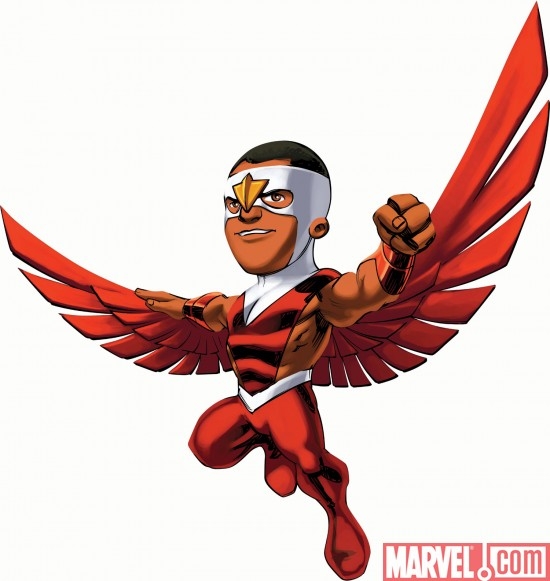
Now what about the Ghost kids and Halloween? Ghost Son is officially a teenager, so no pictures could be had of him and his banana-toting buddies, but Ghost Daughter can safely say she was the only Falcon on the streets that night:


Now what about the Ghost kids and Halloween? Ghost Son is officially a teenager, so no pictures could be had of him and his banana-toting buddies, but Ghost Daughter can safely say she was the only Falcon on the streets that night:

Saturday, October 30, 2010
Countdown to Chaos!
Less than 48 hours until NaNoWriMo begins and I'm not ready yet. Egads! I'm taking today and most likely tomorrow to get my plot straightened out and get myself poised for the attack. My students are doing poetry, which will make it a little easier on me as far as my reading and prep load.
I'm hosting a Write-In and believe or not, I think at least 3 people will actually be there! As far as I know, however, I'm the only kidlit writer in these parts. Anyway, ELEMENTS Coffe Co., crank up the expresso machine and the teapot and get ready for us!
Full disclosure, I am picking up my WIP for this one, but since I'm scarcely 4,000 words in, I'm taking it as a reboot and not vying for a win (if you know what I mean). Lots of buddies are participating this year, so I hope they have their extra powerful motivational boots on so they can kick me in the pants with wild abandon! Now, if you haven't yet checked out Nathan Bransford's awesome advice for NaNoWriMo prep work, get your buns over to his blog and drink it in.
Write on, folks!
I'm hosting a Write-In and believe or not, I think at least 3 people will actually be there! As far as I know, however, I'm the only kidlit writer in these parts. Anyway, ELEMENTS Coffe Co., crank up the expresso machine and the teapot and get ready for us!
Full disclosure, I am picking up my WIP for this one, but since I'm scarcely 4,000 words in, I'm taking it as a reboot and not vying for a win (if you know what I mean). Lots of buddies are participating this year, so I hope they have their extra powerful motivational boots on so they can kick me in the pants with wild abandon! Now, if you haven't yet checked out Nathan Bransford's awesome advice for NaNoWriMo prep work, get your buns over to his blog and drink it in.
Write on, folks!
Monday, October 18, 2010
NaNoWriMo...Why Not?
I admit it. I'm a NaNoWriMo virgin. But I'm putting it out there this time around, hoping that the community and the deadline will give me a little extra momentum as I try to get this next YA banged out. I've resisted in the past primarily because I was already well into a project and making steady progress. This time, however, I could use a little pick-me-up. So here I go.
I'm looking to my writing buddies and acquaintances for further encouragement, and they never let me down. Many of the gals from The Mixed-Up Files of Middle Grade Authors have participated and they're good at spreading the fever. Stephanie Ruble has also offered some helpful tips for newbies like me.
So stay tuned...the counter should be cranking at top speed in about 2 weeks!
I'm looking to my writing buddies and acquaintances for further encouragement, and they never let me down. Many of the gals from The Mixed-Up Files of Middle Grade Authors have participated and they're good at spreading the fever. Stephanie Ruble has also offered some helpful tips for newbies like me.
So stay tuned...the counter should be cranking at top speed in about 2 weeks!
Friday, October 15, 2010
Thank You.

Not too long ago, we received a lovely surprise in the mail. Warrant Officer Phillip Kelliher and his troops were so touched by the girls' notes and cards and thoughtful gifts that they dedicated a mission to the girls and sent along the flag they had flown over that mission as well as a certificate the named the date of the mission and its dedication to the girls. The flag and the original certificate will be displayed in the Office of Continuing Education at Darton.
Reading the personal note from CW4 Kelliher touched both me and Ghost Daughter so much and inspired us to do a little something more. It's not much, but Ghost Daughter wanted it to be personal and hand-made, so I knitted a couple of little soldiers to send CW4 Kelliher. Perhaps I'll make some more. I just know that whenever I think of him and his troops, I wish I could hug each and everyone of them and send them a little piece of home.
I have met a girl who truly knows the value of what these troops are doing. A young woman who had to be smuggled out of Afghanistan before her mother's traitorous act of educating her daughters got them all killed. She started her senior year (at a high school where I once taught) labeled simply as "home-schooled" and soared to the top of the class. Other students were upset that based on only one semester, this stranger uprooted a classmate from the top 10. It wasn't until the Senior Honors dinner that these fortunate young people learned what they really had.
Each student took a turn to stand up and introduce their special guest at the dinner. Some of them brought teachers, some brought family friends. This young woman brought her savior. When her turn came, she stood and told a cynical public how her mother had hidden her and her sister away and educated them in secret because to do so openly could mean death. That everyday, her mother had risked her own life to give her children a better one. That this man, her dear honored guest, had risked his life to smuggle them out of the country just so they could be free to learn and live. This is what an education meant to her. Something worth dying for.
So for all those men and women who serve, thank you. Forget all the political diatribes and posturing. Think of those who lay their lives on the line everyday to protect our lives and our freedom.
Friday, October 08, 2010
Burn, Baby, Burn...
I've been absent from the blogosphere a bit too long, dealing with the sometimes overwhelming tasks of being a writer/teacher/mom/wife with a newly-minted teenager exploring his angst and a feisty 3rd-grader running all over. But I have been checking in from time to time and read something truly heart-breaking.
Last week was Banned Book Week. Censorship is nothing new and some of you may already be familiar with Risha Mullins' plight, but I am still sickened that such a witch hunt can take place in modern America. I fear for our teachers who care about actually teaching our children and even more, about inspiring our children. I fear for the countless kids who could learn so much and discover a love for reading by participating in innovative programs like hers. I fear for the future of this country when small minds can level such ignorant accusations and cripple our schools and allow a fascist minority to dictate that No Child Left Behind actually means no child goes forward to discover the true meaning of critical thinking and growth because those are dangerous concepts.
Look at what a sharp, insightful, creative teacher can do and think about why our kids are in school. Despite the moral majority's opinion, they are not there to pass a test. They are there to learn and to grow. Education is not about dumping information into kids' heads and hoping they can regurgitate it on an endless bubble sheet. The word itself actually translates "to lead or draw out." It's about meeting them in their own space and helping them to explore their world and actually think about the connection between their own experience and all the world has to offer. YA literature is an excellent place to share common experience and expand it to the uncommon. It challenges kids to think about what they know and what could or could not be.
Do we really serve our kids by hiding the truth of human experience from them unless it fits neatly into our own little bubble of the unreal or chronologically irrelevant? Yes, they read MacBeth and A Tale of Two Cities and Night and see some harsh truths about the human condition, but what about Speak and Soul Enchilada and Twenty Boy Summer and The Absolutely True Diary of a Part-Time Indian? While the classics may be great and important literature that will surely live on in English class, AP reading lists, and college courses, can't we make room for the YA experience as well? If we have nothing to turn our kids on to reading, will they ever even open those so-called classics?
I won't go on and on about this because Risha's case sums it up so well, but I challenge those who would keep books from our students to spend a day or even an hour in the poorest neighborhood in town or walk with a girl on her way to planned parenthood or stand for even a minute in the shoes of a teenager wrestling with the truth of his/her sexual orientation. Tell me what your experience is in that case. I know it's not only the white middle class conservatives lodging complaints. Any closed-minded group can curry oppression. I once had an African American parent complain about the film The Power of One because it showed the abominable treatment of a black South African. Never mind that the film actually abhors the injustice Apartheid perpetuated and celebrates the power of even one small voice to make a difference. This parent couldn't be bothered to actually watch the movie or consider the power of its message for her child. We certainly could not have read the book, because most of the kids in this class could hardly put a subject with a verb because they had skipped through school all these years without reading anything but the inside cover Cliffnotes.
I wonder if all the kids who read The Crucible in their high school English class have any idea that they are bubbling and burning in a crucible of their own...
Check out these links:
The Kids' Right to Read Project
The Book Smugglers
Controversial & Banned Books
Last week was Banned Book Week. Censorship is nothing new and some of you may already be familiar with Risha Mullins' plight, but I am still sickened that such a witch hunt can take place in modern America. I fear for our teachers who care about actually teaching our children and even more, about inspiring our children. I fear for the countless kids who could learn so much and discover a love for reading by participating in innovative programs like hers. I fear for the future of this country when small minds can level such ignorant accusations and cripple our schools and allow a fascist minority to dictate that No Child Left Behind actually means no child goes forward to discover the true meaning of critical thinking and growth because those are dangerous concepts.
Look at what a sharp, insightful, creative teacher can do and think about why our kids are in school. Despite the moral majority's opinion, they are not there to pass a test. They are there to learn and to grow. Education is not about dumping information into kids' heads and hoping they can regurgitate it on an endless bubble sheet. The word itself actually translates "to lead or draw out." It's about meeting them in their own space and helping them to explore their world and actually think about the connection between their own experience and all the world has to offer. YA literature is an excellent place to share common experience and expand it to the uncommon. It challenges kids to think about what they know and what could or could not be.
Do we really serve our kids by hiding the truth of human experience from them unless it fits neatly into our own little bubble of the unreal or chronologically irrelevant? Yes, they read MacBeth and A Tale of Two Cities and Night and see some harsh truths about the human condition, but what about Speak and Soul Enchilada and Twenty Boy Summer and The Absolutely True Diary of a Part-Time Indian? While the classics may be great and important literature that will surely live on in English class, AP reading lists, and college courses, can't we make room for the YA experience as well? If we have nothing to turn our kids on to reading, will they ever even open those so-called classics?
I won't go on and on about this because Risha's case sums it up so well, but I challenge those who would keep books from our students to spend a day or even an hour in the poorest neighborhood in town or walk with a girl on her way to planned parenthood or stand for even a minute in the shoes of a teenager wrestling with the truth of his/her sexual orientation. Tell me what your experience is in that case. I know it's not only the white middle class conservatives lodging complaints. Any closed-minded group can curry oppression. I once had an African American parent complain about the film The Power of One because it showed the abominable treatment of a black South African. Never mind that the film actually abhors the injustice Apartheid perpetuated and celebrates the power of even one small voice to make a difference. This parent couldn't be bothered to actually watch the movie or consider the power of its message for her child. We certainly could not have read the book, because most of the kids in this class could hardly put a subject with a verb because they had skipped through school all these years without reading anything but the inside cover Cliffnotes.
I wonder if all the kids who read The Crucible in their high school English class have any idea that they are bubbling and burning in a crucible of their own...
Check out these links:
The Kids' Right to Read Project
The Book Smugglers
Controversial & Banned Books
Tuesday, September 14, 2010
Word by Word
That's how it will begin...and that's how it will end. Yes, my newest is WIP is officially underway and promises to be even more exciting than the last, though this one has had a tougher launch. Lots of distraction and a little obsession have de-railed my initial plan to blaze on through this one and have a smoking hot YA thriller to send out the door before Christmas. Ha! I can hope...
Summer, car trouble, family entailments, new job—yeah, I can blame a lot of things. I think the most devastating obstacle, however, has been my own ego. Yep. I've been obsessing over my many writing buds who are making their sales and celebrating big deals, while I feel like a failure and put one on the shelf to rest a while and start anew.
Oh, I will still poke my head into this pity party every now and then, but enough is enough. My WIP will never get written if I don't start laying down some words, even crappy words. Besides, my last book is not a failure...it's just delayed. So, off I go to write a slamming new YA and frankly, it will be awesome. So to give myself a little kick in the butt, I thought perhaps I might post my word count on my blog. I know, I know. I could be setting myself up for utter humiliation, but I need to start somewhere. So, I start at this moment with a total of 2,775 words. I have a few more to add today, but that's where I ended up at 3:00pm.
And that's how I will take this next part of the journey—word by word...
Wednesday, September 08, 2010
Before I started writing semi-full-time, I taught full time. Believe me, there are very few teaching jobs that are "fluff" jobs, but lately there has been a lot of debate about the fate of tenure in American universities. A recent essay by Christopher Shea in the New York Times Sunday Book Review addresses two books that tackle the question — Higher Education? How Colleges Are Wasting Our Money and Failing Our Kids — And What We Can Do About It, by Andrew Hacker and Claudia C. Dreifus, and Crisis on Campus: A Bold Plan for Reforming Our Colleges and Universities, by Mark C. Taylor. Earlier in July, the NYT also posted a debate that considers the ramifications of eliminating tenure and restructure higher education altogether, a thought that makes me cringe, though I am no blind disciple of the system as it is.
I'm not going to rant and rave about why tenure should be protected or why colleges should cutout the bulk of administrative fat that clogs the financial and social arteries of most institutions of higher learning. However, I find it funny that so many people seem to think the majority of tenured college professors are self-indulgent fusspots who rest on their laurels and do little teaching and spend their time spouting communist propaganda and cranking out fluff scholarship and books that no one reads while the adjuncts do all the heavy lifting with no benefits or job security. Come on folks! For every job in America, from sanitation to corporations, you will find that guy.
As an English teacher, I constantly warn my students against laying out sweeping generalizations to prove a point. It undermines your credibility and obscures the real issue. Yes, such examples of vocational gluttony do exist, and I'm sure those professors feel they are entitled because of their own years of slave-labor and hard-won scholarly credentials. But most of the tenured professors I know do teach full loads AND work on research or scholarship or service projects. Their extra-curricular work makes considerable contributions to their students as well as their field of study and their campus community.
As for who gets the money...few college professors I know make more than $50,000-80,000 a year, while college administrators and athletic personnel go well into 6-digit salaries. And that's where Shea gets it right:
I know that from city school districts to small colleges to major universities, administrations are far too often top-heavy and the distributions of funds less than equitable or reasonable.
When it comes to tenure, let me say this. In a profession where speaking your mind is one of the most essential tools in your belt, as well as the most dangerous, and where your "superiors" can wield an Orwellian power that could extinguish a brilliant mind just for having an opinion if there were no protections against such dictatorial rule, tenure is merely a safety net that allows a professor an iota of freedom to do his job well. Without it, education would cease to exist and indoctrination would takes its place. Yes, that may be a little over-dramatic, but think about what a professor's job is all about.
Now consider the ever-growing complexities of the university system as a whole and the competitive playing field that now encompasses web presence, commercial appeal, financial growth, and social credibility in addition to its altruistic roots of education.
Every college or university has its own agenda...it's own "mission." For some, research is their claim to fame, while others subsist quietly on the satisfaction of educating eager minds no matter what their next step may be. So while I sit up and wait for my tenure-track professor husband as he sweats out the next book or the next service project or the next committee meeting along with preparing inspiring class lectures and activities and grading essays and advising students, I'll think about how "overpaid" he is. Next time I take my calculator to the grocery store and put back six items because they just aren't in the budget, I think about how "overpaid" he is. And next time I try to plan that family vacation that we have never taken in 15 years...I'll think about how overpaid he is.
At least he has job security...
I'm not going to rant and rave about why tenure should be protected or why colleges should cutout the bulk of administrative fat that clogs the financial and social arteries of most institutions of higher learning. However, I find it funny that so many people seem to think the majority of tenured college professors are self-indulgent fusspots who rest on their laurels and do little teaching and spend their time spouting communist propaganda and cranking out fluff scholarship and books that no one reads while the adjuncts do all the heavy lifting with no benefits or job security. Come on folks! For every job in America, from sanitation to corporations, you will find that guy.
As an English teacher, I constantly warn my students against laying out sweeping generalizations to prove a point. It undermines your credibility and obscures the real issue. Yes, such examples of vocational gluttony do exist, and I'm sure those professors feel they are entitled because of their own years of slave-labor and hard-won scholarly credentials. But most of the tenured professors I know do teach full loads AND work on research or scholarship or service projects. Their extra-curricular work makes considerable contributions to their students as well as their field of study and their campus community.
As for who gets the money...few college professors I know make more than $50,000-80,000 a year, while college administrators and athletic personnel go well into 6-digit salaries. And that's where Shea gets it right:
And if colleges are ever going to bend the cost curve, to borrow jargon from the health care debate, it might well be time to think about vetoing Olympic-quality athletic facilities and trimming the ranks of administrators.
I know that from city school districts to small colleges to major universities, administrations are far too often top-heavy and the distributions of funds less than equitable or reasonable.
When it comes to tenure, let me say this. In a profession where speaking your mind is one of the most essential tools in your belt, as well as the most dangerous, and where your "superiors" can wield an Orwellian power that could extinguish a brilliant mind just for having an opinion if there were no protections against such dictatorial rule, tenure is merely a safety net that allows a professor an iota of freedom to do his job well. Without it, education would cease to exist and indoctrination would takes its place. Yes, that may be a little over-dramatic, but think about what a professor's job is all about.
Now consider the ever-growing complexities of the university system as a whole and the competitive playing field that now encompasses web presence, commercial appeal, financial growth, and social credibility in addition to its altruistic roots of education.
Every college or university has its own agenda...it's own "mission." For some, research is their claim to fame, while others subsist quietly on the satisfaction of educating eager minds no matter what their next step may be. So while I sit up and wait for my tenure-track professor husband as he sweats out the next book or the next service project or the next committee meeting along with preparing inspiring class lectures and activities and grading essays and advising students, I'll think about how "overpaid" he is. Next time I take my calculator to the grocery store and put back six items because they just aren't in the budget, I think about how "overpaid" he is. And next time I try to plan that family vacation that we have never taken in 15 years...I'll think about how overpaid he is.
At least he has job security...
Tuesday, September 07, 2010
I'll have a plate of Hypocrisy and a side of Stupidity, please...
I don't like to talk politics, especially on a blog, but when some ignorant group of fascists declares a "national burn the Koran day," I simply cannot hold my tongue. Yes, that idiot pastor Terry Jones appeared on a recent episode of HARDBALL with Chris Matthews as well as CNN to proclaim 9/11 as a demonstration against Islam. Sure, he says "Muslims are free to worship here, but they must respect the constitution...that's why we have declared 9/11 national burn the Koran day." Really? Are you kidding me? How can he not see the hypocrisy in that statement?
What gets me about these fundamentalists is their complete tunnel vision and lack of self-reflection. Shall we say that Jim Jones represented all Christians? How about the Ku Klux Klan? Or even Timothy McVeigh?
Mr. Jones calls for "radical times" and all but incites violence against Muslims. Interviewer Rick Sanchez called him to task, saying he does a disservice to Christians. Amen. What astonishes me even more is the fact that this guy actually has followers who take him seriously. This is how Hitler got his start, isn't it?
What gets me about these fundamentalists is their complete tunnel vision and lack of self-reflection. Shall we say that Jim Jones represented all Christians? How about the Ku Klux Klan? Or even Timothy McVeigh?
Mr. Jones calls for "radical times" and all but incites violence against Muslims. Interviewer Rick Sanchez called him to task, saying he does a disservice to Christians. Amen. What astonishes me even more is the fact that this guy actually has followers who take him seriously. This is how Hitler got his start, isn't it?
Sunday, August 15, 2010
Running Towards Nirvana
You hear it all the time: "Writing and publishing a book is a marathon not a sprint." What I would like to know is...Is this a 5k, a 10k, or a 20k run? I don't want to be a nattering nabob, but I feel as though I've hit that wall more than once, and I'm wondering if I have that second wind that everyone talks about. Don't get me wrong. I have plenty of stories in me, plenty of spooky atmosphere waiting to splash all over my laptop. And I know I can write a kick-ass book. But right now I have some serious writer's cramp.
When do you break through the wall of pain and find that writer's nirvana?
I promised myself, and the Madwoman, that I would write everyday in August. Sorry folks...I stumbled. It must be faulty running shoes! To be fair, I did take my son on a 4-day junket to meet his best friend in North Carolina. Totally worth it and can't wait to do it again next year. And when I returned, I had the whole college course to design in a week and a half. So in some ways I was writing, just not writing.
I'm hoping that tightening my schedule with these 2 classes will actually help me sharpen my focus and slam this new WIP. Is it possible? Will splitting my concentration guide me to that Zen awareness of my inner voices? (believe me, there are more than one!) Is distraction the key to razor sharp focus? Obiwan, where are you when I need you?
I suppose I can blame summer and the scorching Georgia heat as I gasp for breath and reach for the inhaler.
But I do remember it...that rush when I get totally lost in a scene I've just written. That adrenaline overload when I've just written the last page and I can't sit still and have to walk it off until my breathing settles back into its normal rhythm. How many miles until I know that again?
Maybe I forgot to stretch before this leg of the race. Perhaps my running shoes need a re-tread. Or maybe I just need to crank up the iPod. Somewhere down this road, the endorphins will kick in. Right? I guess I can't know unless I keep running...and writing. And frankly, at this point I don't know how to stop.
When do you break through the wall of pain and find that writer's nirvana?
I promised myself, and the Madwoman, that I would write everyday in August. Sorry folks...I stumbled. It must be faulty running shoes! To be fair, I did take my son on a 4-day junket to meet his best friend in North Carolina. Totally worth it and can't wait to do it again next year. And when I returned, I had the whole college course to design in a week and a half. So in some ways I was writing, just not writing.
I'm hoping that tightening my schedule with these 2 classes will actually help me sharpen my focus and slam this new WIP. Is it possible? Will splitting my concentration guide me to that Zen awareness of my inner voices? (believe me, there are more than one!) Is distraction the key to razor sharp focus? Obiwan, where are you when I need you?
I suppose I can blame summer and the scorching Georgia heat as I gasp for breath and reach for the inhaler.
But I do remember it...that rush when I get totally lost in a scene I've just written. That adrenaline overload when I've just written the last page and I can't sit still and have to walk it off until my breathing settles back into its normal rhythm. How many miles until I know that again?
Maybe I forgot to stretch before this leg of the race. Perhaps my running shoes need a re-tread. Or maybe I just need to crank up the iPod. Somewhere down this road, the endorphins will kick in. Right? I guess I can't know unless I keep running...and writing. And frankly, at this point I don't know how to stop.
Tuesday, July 27, 2010
Cries from a Cultural Wasteland
Huddled at my tiny round table in a dim corner of the coffee house, sipping my caramel milk tea (non-dairy of course), I grasp at the few shadows of civilized life and dream of flesh-and-blood writer contact. Yes, after a quick search on the SCBWI roster, I found exactly one (1) writer who lives within a 20-mile radius of this little cesspool. Surely there are a few more out there, hiding among the palmetto bugs (aka giant cockroaches), lizards, and title pawn shops.
Two years ago, when we first knew a move was in the offing, I dared to think of it as a new adventure, a chance to stretch a little more and maybe even afford a little more house or settle near the ocean. If truth be told, I got my wish, though not exactly the way I had envisioned it. It certainly has been an adventure...something like those pioneer stories we read in grade school. No, there are no savage indians or blood-thirsty bandits threatening our wagon train, but to put it bluntly, we have rolled into a fearsome wilderness. A vast cultural wasteland where the nearest thing to civilization (besides the college) is a Books-a-Million in the mall and this little slice of heaven called Elements. What's a writer to do?
Observe. Listen. Sketch. That's it. I'm soaking in the atmosphere and the characters and the cadence of life down here in the South. Spanish moss dripping from the trees, pine straw swaddling the shrubs and flowers that decorate even the mienest of bungalows, ladies in brimmed hats sipping sweet tee while they swat away a hoard of psychotic gnats. And the festivals...yes, festivals of all kinds—The Peanut Festival, The Gnat Festival, the Fleagrass Festival, The Mayhaw Festival, The Dogwood Festival, The Rattlesnake Roundup. You get the idea. I love festivals! But you have to admit, they do things a little differently in the deep South. That can be a real boon for a writer. Right?
Three hours away, Atlanta offers a more cultured escape. But in this economy, even a quick jaunt up to civilization is a rare treat. So, I'm putting it out there: a call to writers—kidlit/YA people in particular, who live anywhere near Albany, Georgia—support group for lonely, deprived writers who need a little encouragement and a dose of literary conversation. I have posted a note on SCBWI and on the Blue Boards, but so far I've discovered that the SW Georgia is not exactly a mecca for artistic personalities. I'm not a big one for critique groups, so I'm not focusing on that aspect of things. This is truly meant to be a hopeful gathering of writers to share experiences, vent frustrations, and perhaps share a little low-pressure critique from time to time. Maybe I'll make a silk purse from a sow's ear after all...or maybe I'll just press on into the wilderness.
For now, I'll go back to my luscious caramel milk tea in my dark little corner of the coffee house and wait for that familiar whinny that announces new mail.
Two years ago, when we first knew a move was in the offing, I dared to think of it as a new adventure, a chance to stretch a little more and maybe even afford a little more house or settle near the ocean. If truth be told, I got my wish, though not exactly the way I had envisioned it. It certainly has been an adventure...something like those pioneer stories we read in grade school. No, there are no savage indians or blood-thirsty bandits threatening our wagon train, but to put it bluntly, we have rolled into a fearsome wilderness. A vast cultural wasteland where the nearest thing to civilization (besides the college) is a Books-a-Million in the mall and this little slice of heaven called Elements. What's a writer to do?
Observe. Listen. Sketch. That's it. I'm soaking in the atmosphere and the characters and the cadence of life down here in the South. Spanish moss dripping from the trees, pine straw swaddling the shrubs and flowers that decorate even the mienest of bungalows, ladies in brimmed hats sipping sweet tee while they swat away a hoard of psychotic gnats. And the festivals...yes, festivals of all kinds—The Peanut Festival, The Gnat Festival, the Fleagrass Festival, The Mayhaw Festival, The Dogwood Festival, The Rattlesnake Roundup. You get the idea. I love festivals! But you have to admit, they do things a little differently in the deep South. That can be a real boon for a writer. Right?
Three hours away, Atlanta offers a more cultured escape. But in this economy, even a quick jaunt up to civilization is a rare treat. So, I'm putting it out there: a call to writers—kidlit/YA people in particular, who live anywhere near Albany, Georgia—support group for lonely, deprived writers who need a little encouragement and a dose of literary conversation. I have posted a note on SCBWI and on the Blue Boards, but so far I've discovered that the SW Georgia is not exactly a mecca for artistic personalities. I'm not a big one for critique groups, so I'm not focusing on that aspect of things. This is truly meant to be a hopeful gathering of writers to share experiences, vent frustrations, and perhaps share a little low-pressure critique from time to time. Maybe I'll make a silk purse from a sow's ear after all...or maybe I'll just press on into the wilderness.
For now, I'll go back to my luscious caramel milk tea in my dark little corner of the coffee house and wait for that familiar whinny that announces new mail.
Wednesday, July 14, 2010
To Answer the MFA Question
I just had to add this little nugget from Kurt Vonnegut:
Thanks to everyone who offered some advice on this topic. Several people said the MFA pursuit transformed their writing lives, while others offered more practical comments, especially when it comes to the financial burden that comes with such a choice. I think the very best advice I got came down to a very simple but essential issue: Be very clear about what you are hoping to get out of the experience. (Thanks, Laura).
My uber-awesome agent, Elana Roth, has me dialed in to a tee; it's not about giving myself a leg up towards publishing. I know I have what it takes, and I have exactly the right representation on my side. But I am totally an information junkie. I'm addicted to knowledge and love the whole school experience, as grueling as it can be. Usually.
However, I am in a very different place in my life, now, and I have a lot of other things to consider. Kids. Husband. All the complexities of mid-life angst. So is the MFA really the best thing for me at this particular moment? Probably not. Are there compelling reasons that could supersede the more practical considerations against going for the MFA? Definitely. But they are not compelling enough right now. And to come back to that most salient point, what I am hoping to get out of it, I may already have. Sorry I can't be more specific than that, but suffice it to say the point is as much emotional as intellectual.
Add to the mix a newly-procured adjunct position at the local college and you have the final answer: No. It's not time to take that particular leap. Maybe some day. So while I let that simmer in the back of my brain for a while, I will bust through this current WIP and kick some YA butt.
Beware of the man who works hard to learn something, learns it, and finds himself no wiser than before... He is full of murderous resentment of people who are ignorant without having come by their ignorance the hard way.
Thanks to everyone who offered some advice on this topic. Several people said the MFA pursuit transformed their writing lives, while others offered more practical comments, especially when it comes to the financial burden that comes with such a choice. I think the very best advice I got came down to a very simple but essential issue: Be very clear about what you are hoping to get out of the experience. (Thanks, Laura).
My uber-awesome agent, Elana Roth, has me dialed in to a tee; it's not about giving myself a leg up towards publishing. I know I have what it takes, and I have exactly the right representation on my side. But I am totally an information junkie. I'm addicted to knowledge and love the whole school experience, as grueling as it can be. Usually.
However, I am in a very different place in my life, now, and I have a lot of other things to consider. Kids. Husband. All the complexities of mid-life angst. So is the MFA really the best thing for me at this particular moment? Probably not. Are there compelling reasons that could supersede the more practical considerations against going for the MFA? Definitely. But they are not compelling enough right now. And to come back to that most salient point, what I am hoping to get out of it, I may already have. Sorry I can't be more specific than that, but suffice it to say the point is as much emotional as intellectual.
Add to the mix a newly-procured adjunct position at the local college and you have the final answer: No. It's not time to take that particular leap. Maybe some day. So while I let that simmer in the back of my brain for a while, I will bust through this current WIP and kick some YA butt.
Saturday, July 10, 2010
A Fun Contest
To celebrate the fabulous news that her book, MY UN-FAIRY TALE LIFE sold to Sourcebooks Jabberwocky, Anna Staniszewski is having a fun contest on her blog. Head on over there to win a copy of either THE TRUE MEANING OF SMEK DAY by Adam Rex or WHALES ON STILTS by M.T. Anderson.
And stay tuned for my follow-up to the big MFA question...
And stay tuned for my follow-up to the big MFA question...
Tuesday, July 06, 2010
To MFA or Not to MFA?
As if I don't have enough on my plate, I am tossing around the idea of going for a low residency MFA. Why? Perhaps because it's there. Or maybe because it would give me a more solid credential for teaching at the college. Or maybe because I'm itching for another way to hone the craft. Of course if you read The New Yorker's article Show or Tell, you might come to the conclusion that it's all just another way for universities to make money while pampering egos and proffering false hopes. Sure, Louis Menand tips his hat to some of the benefits of such programs, but overall, you come away feeling a tiny bit idiotic for even thinking of doing a degree in creative writing. Nonetheless, learning is learning and what you do with it is up to you.
So that doesn't help so much. Perhaps a list of pros and cons would shed a little more light.
PROS:
CONS:
While I mull all that over, I'll look at what's out there. I found a fabulous website posted by Anna from Bryn Mawr that gives a good overview of what to look for and then provides listings for programs according to regions. Another Blog that offers information and general commentary on Creative Writing programs is the MFA Weblog. NewPages.com also offers a list of universities and colleges who offer MFA programs—some low residency and some full residency. Byzantine Roads is yet another cite that lists a number of MFA in Creative Writing options.
So with all of this information, do I really want to pursue another degree? I have one half-finished Ph.d. that will go nowhere. Would and MFA really offer me anything I truly need? Of course the other option would be to look into a Library Science degree. I'm just saying...
So that doesn't help so much. Perhaps a list of pros and cons would shed a little more light.
PROS:
- I love going to school. (cue the nerd music)
- I would have another reason to throw myself into my writing.
- I would have a chance to work with some of the people who inspire me. (of course I can get some of that at conferences and Highlights Foundation Workshops, too)
- I would have a piece of paper that says I can write. (just a little chuckle on this one)
- I could add MFA to my vitae and pump up my credentials
CONS:
- Money. The biggest drawback is spending more money that we don't have. I can apply for scholarships, but that's no guarantee that I will get one. And do I really need more student loans?
- Time. I am in command of my time, more or less, right now, but will a Low Res program be flexible enough for me and my family?
- Are there enough benefits or potential benefits to even consider sinking the time and money into an MFA?
While I mull all that over, I'll look at what's out there. I found a fabulous website posted by Anna from Bryn Mawr that gives a good overview of what to look for and then provides listings for programs according to regions. Another Blog that offers information and general commentary on Creative Writing programs is the MFA Weblog. NewPages.com also offers a list of universities and colleges who offer MFA programs—some low residency and some full residency. Byzantine Roads is yet another cite that lists a number of MFA in Creative Writing options.
So with all of this information, do I really want to pursue another degree? I have one half-finished Ph.d. that will go nowhere. Would and MFA really offer me anything I truly need? Of course the other option would be to look into a Library Science degree. I'm just saying...
Tuesday, June 29, 2010
Frailty
I was at my RA doctor for a routine appointment today, and she mentioned that my recent x-rays show signs of osteoporosis. Gulp. She said it's not a surprise since I'm "caucasian, pettite, and frail..." Hang on! Did she just use that word to describe ME? FRAIL? I was that skinny little girl who played football with the boys and got called for rough play. I was the only chick on the baseball team and I kicked ass. I've wrangled spastic horses through the hunt field and slightly crazy kids in the classroom and at home. I've travelled the world. I've never backed away from a challenge. What's she talking about frail?!
My mind sort of went white and silent all of a sudden as I considered this description. Okay, so I was ever so lucky to develop Rheumatoid Arthritis when I was 34. Does that mean I'm frail? Somehow less than that balls-out chick who jumped from balconies and dirt-skiied down the dusty ravine beside my house when I was a kid? There is a huge dissonance between the person I feel in my bones and the one this doctor was looking at. But I guess what really bothered me was the dubious assumption that physical and mental weakness were not necessarily mutually exclusive. (Don't ask me why I jumped there.)
Then I started thinking about my characters and how they develop. Have I let some frailty slip by me when I wasn't looking? Do they ever feel the way I did at that moment? Probably. Should I allow them to feel that way? Maybe.
One of the big issues I tackle with my new characters is their flaws. What does that really mean? I look at it as more of a blind spot in most cases—that part of their personality that gets them into trouble. But what if it's something that keeps them from achieving their goal? They could be one in the same, but not always. Good character development is complex and lets the reader squirm a little. We cringe when they say the wrong thing, but that only makes them more real to us. We slap ourselves in the head when they make some bonehead move that puts them in danger or alienates them from the other characters, but that only elevates the sense of triumph when they succeed or deepens the mourning when they fail.
I've spent most of my life hearing about and facing my flaws. Let's just say I've had a lot of practice. But what does that really mean? Is there some continuum where the degree and number of flaws a person has add up to frailty? Somewhere in that doctor's office I started to think so. I thought about it as I drove home. I thought about it as I slammed the car door shut. I thought about it as I prepared to take my child to the orthodontist to have her skull expanded so all of her teeth would fit. I'm not sure I really have an answer, but in the end it seems to come down to that dirty little literary notion of the human condition. In the grand scheme of things, I suppose we are all frail...small and frail and oh so significant.
W.B. Yeats wrote a lot about human frailty... (please pardon my maudlin indulgence).
My mind sort of went white and silent all of a sudden as I considered this description. Okay, so I was ever so lucky to develop Rheumatoid Arthritis when I was 34. Does that mean I'm frail? Somehow less than that balls-out chick who jumped from balconies and dirt-skiied down the dusty ravine beside my house when I was a kid? There is a huge dissonance between the person I feel in my bones and the one this doctor was looking at. But I guess what really bothered me was the dubious assumption that physical and mental weakness were not necessarily mutually exclusive. (Don't ask me why I jumped there.)
Then I started thinking about my characters and how they develop. Have I let some frailty slip by me when I wasn't looking? Do they ever feel the way I did at that moment? Probably. Should I allow them to feel that way? Maybe.
One of the big issues I tackle with my new characters is their flaws. What does that really mean? I look at it as more of a blind spot in most cases—that part of their personality that gets them into trouble. But what if it's something that keeps them from achieving their goal? They could be one in the same, but not always. Good character development is complex and lets the reader squirm a little. We cringe when they say the wrong thing, but that only makes them more real to us. We slap ourselves in the head when they make some bonehead move that puts them in danger or alienates them from the other characters, but that only elevates the sense of triumph when they succeed or deepens the mourning when they fail.
I've spent most of my life hearing about and facing my flaws. Let's just say I've had a lot of practice. But what does that really mean? Is there some continuum where the degree and number of flaws a person has add up to frailty? Somewhere in that doctor's office I started to think so. I thought about it as I drove home. I thought about it as I slammed the car door shut. I thought about it as I prepared to take my child to the orthodontist to have her skull expanded so all of her teeth would fit. I'm not sure I really have an answer, but in the end it seems to come down to that dirty little literary notion of the human condition. In the grand scheme of things, I suppose we are all frail...small and frail and oh so significant.
W.B. Yeats wrote a lot about human frailty... (please pardon my maudlin indulgence).
The Four Ages of Man
He with body waged a fight,
But body won; it walks upright.
Then he struggled with the heart;
Innocence and peace depart.
Then he struggled with the mind;
His proud heart he left behind.
Now his wars on God begin;
At stroke of midnight, God shall win.
He with body waged a fight,
But body won; it walks upright.
Then he struggled with the heart;
Innocence and peace depart.
Then he struggled with the mind;
His proud heart he left behind.
Now his wars on God begin;
At stroke of midnight, God shall win.
Monday, June 21, 2010
Toy Story 3 and why I bawled my eyes out...
For Father's Day, we decided to take a family excursion to the event that is TOY STORY 3. My expectations were only slightly guarded as Pixar has more than delivered on this franchise twice already. What I hadn't braced myself for, however, was my own parental journey as I sat there with my 13-year-old son and 9-year-old daughter and watched Andy say goodbye to his beloved pals as we, too, said goodbye not only to these wonderful characters, but to our own sense of childhood while our role as parents becomes ever more tenuous. This parting is particularly poignant when it comes to our son who has grown up far too quickly along with Andy.
The first TOY STORY came out in 1995, just 2 years before my son was born. Of course Ghost Hunk and I saw it in the theatre, young newlyweds who enjoyed good film making. Heck, one of our early dates was to see BEAUTY AND THE BEAST. When our son was 2 years old, we introduced him to the magical world of movies, beginning with TARZAN and THE IRON GIANT and TOY STORY 2. That boy was made for the cinema. He loved sitting in a theatre with Mama and/or Daddy, drinking in whatever amazing story spilled across the darkness. We all cried when the Iron Giant sacrificed himself and when Jessie's torch song pulled us into her heartache and loss. Sure, Ghost Son saw the first one on video before we hit the theatre for the sequel, but it was no less enthralling and he immediately loved all the characters, old and new.
As I watched Andy pack for college yesterday, it suddenly struck me that our own little dude is only 5 years away from that. There is really nothing left of that baby, anymore, that fantastic toddler whose belly laughs filled up the house and shook us all with such joy. I know...this may get a little maudlin, but I'm a mom. I can't help myself. (By the way, the same actor has given Andy his voice in all three movies.)
I felt him sitting there next to me in the dark, growing, maturing every minute. And it didn't help that Andy is a lot like our boy. I'm sure he's a lot like many boys, but I'll continue to believe our son is exceptional, unique, amazing.When Andy makes his decision to give his toys to a little girl who will love them well, I had mixed feelings. Happy that the gang will continue to be loved and treasured, but sad that Andy will forever be separated from them. That he has grown up. His own hesitation is so telling. As he played with his friends one last time, introducing them to their new owner and making sure their stories continue, my heart ached. The realization that our son would be leaving, growing up, abandoning his childhood things, well that started a flood. Yes, I cried. I sobbed. I bawled my freaking eyes out!
Ghost Son thought I was being a little too sensitive about Andy's toys, but then he, too, realized that he was growing up and what that meant to his loony old mom. That's the thing about all three of these movies. They touch real emotions. No matter how old you are, you can relate to the trials of Woody, Buzz, Jessie, and the gang. We know what it is to be betrayed that first time, to be abandoned by someone moving on to another stage of their life, to learn the price of friendship and how to have a little more faith in ourselves. These are such raw, real experiences no matter how old you get.
And now, I've watched my children trip through these quintessential life moments and TOY STORY 3 just brought all of it home with a 1-2 punch to the gut. They are growing up. They will be on their own sooner than we want, but they are ready to take on the world. I just wish I were ready to let them...
The first TOY STORY came out in 1995, just 2 years before my son was born. Of course Ghost Hunk and I saw it in the theatre, young newlyweds who enjoyed good film making. Heck, one of our early dates was to see BEAUTY AND THE BEAST. When our son was 2 years old, we introduced him to the magical world of movies, beginning with TARZAN and THE IRON GIANT and TOY STORY 2. That boy was made for the cinema. He loved sitting in a theatre with Mama and/or Daddy, drinking in whatever amazing story spilled across the darkness. We all cried when the Iron Giant sacrificed himself and when Jessie's torch song pulled us into her heartache and loss. Sure, Ghost Son saw the first one on video before we hit the theatre for the sequel, but it was no less enthralling and he immediately loved all the characters, old and new.
As I watched Andy pack for college yesterday, it suddenly struck me that our own little dude is only 5 years away from that. There is really nothing left of that baby, anymore, that fantastic toddler whose belly laughs filled up the house and shook us all with such joy. I know...this may get a little maudlin, but I'm a mom. I can't help myself. (By the way, the same actor has given Andy his voice in all three movies.)
I felt him sitting there next to me in the dark, growing, maturing every minute. And it didn't help that Andy is a lot like our boy. I'm sure he's a lot like many boys, but I'll continue to believe our son is exceptional, unique, amazing.When Andy makes his decision to give his toys to a little girl who will love them well, I had mixed feelings. Happy that the gang will continue to be loved and treasured, but sad that Andy will forever be separated from them. That he has grown up. His own hesitation is so telling. As he played with his friends one last time, introducing them to their new owner and making sure their stories continue, my heart ached. The realization that our son would be leaving, growing up, abandoning his childhood things, well that started a flood. Yes, I cried. I sobbed. I bawled my freaking eyes out!
Ghost Son thought I was being a little too sensitive about Andy's toys, but then he, too, realized that he was growing up and what that meant to his loony old mom. That's the thing about all three of these movies. They touch real emotions. No matter how old you are, you can relate to the trials of Woody, Buzz, Jessie, and the gang. We know what it is to be betrayed that first time, to be abandoned by someone moving on to another stage of their life, to learn the price of friendship and how to have a little more faith in ourselves. These are such raw, real experiences no matter how old you get.
And now, I've watched my children trip through these quintessential life moments and TOY STORY 3 just brought all of it home with a 1-2 punch to the gut. They are growing up. They will be on their own sooner than we want, but they are ready to take on the world. I just wish I were ready to let them...
Tuesday, June 08, 2010
In the Flesh
At least once in a writer's career, she will hear someone say, "Flesh out that character more." I chant that in my head sometimes as I work on more personal sections of my book. But what does that mean? How do you put flesh on the bones of an imaginary friend (or enemy)?
There are some great tools out there to give you a nudge: Nancy Lamb has some great checklists in her book, THE WRITER'S GUIDE TO CRAFTING STORIES FOR CHILDREN. You generate a lot of details (that you may or may not use in the actual narrative) that get you to see the character as a whole.
I'm also glancing through Orson Scott Card's ELEMENTS OF FICTION: CHARACTERS & VIEWPOINTS for a few hints. He takes you through some great discussions of motivation, emotional appeal, archetypes, and more.
But sometimes all this studying can get a bit overwhelming (not that I've done a lot of it). In the end, I have to do the work. Get down in the clay and start molding and sculpting with my own two hands. The dirtier I get the better.
So for my latest WIP, I took my 4 main characters (including the narrator) and gave them each their own page. I started with a GENERAL DESCRIPTION. This can include physical and emotional, but I keep it simple and straight-forward. The hard-core stuff comes in the writing. In this section I also include and habits or ticks or preferences she/he might have—ie. trips over her own feet, hates to clean the chicken coop but loves to muck the stalls, wears a red string on her left pinky toe every day, etc. What pushes your character's buttons?
Next I look at RELATIONSHIPS. What characterizes her relationship with each major character in the book? If it's relevant, what characterizes her relationship with people not present in the narrative? Dead or absent parents, friends, or relatives, for example. Characters don't live in a vacuum any more than a living, breathing person does...unless you have an agoraphobic personality! Thinking ahead, I consider how those relationships will change through the course of the novel. Think dynamic not static.
It's time to look at some FLAWS. Every character has to have them. Big or small, a flaw is what makes your character human. Whether you write humorous MG or tragic YA, your characters cannot be perfect. They may even piss the reader off once in a while, just as long as there is enough redeeming virtue to keep the reader connected and rooting for your hero. These may come in handy when you build the climax and develop subplots.
Don't forget your villains. Villains should evoke anger, disdain, even condescension but they should not be flat. Take them through all the steps as well. We need to have a sense that there is more to them than their slithery betrayal.
I'm keeping it short, so I end with a list of WORDS THAT DESCRIBE my character. Gut reaction words. You may find that some of them contradict each other, and that is not necessarily a problem. After all, most of us get confused at some time or another, especially kids. Come to think of it, adolescence is a cloud of contradictions!
That's the basic list I make for myself, and I post them on the wall by my desk or keep them in my WIP folder, along with a list of themes, snippets of research, and any other scrap of inspiration that will put a little flesh on the bones and breathe life into this shiny new world.
What do you do?
There are some great tools out there to give you a nudge: Nancy Lamb has some great checklists in her book, THE WRITER'S GUIDE TO CRAFTING STORIES FOR CHILDREN. You generate a lot of details (that you may or may not use in the actual narrative) that get you to see the character as a whole.
I'm also glancing through Orson Scott Card's ELEMENTS OF FICTION: CHARACTERS & VIEWPOINTS for a few hints. He takes you through some great discussions of motivation, emotional appeal, archetypes, and more.
But sometimes all this studying can get a bit overwhelming (not that I've done a lot of it). In the end, I have to do the work. Get down in the clay and start molding and sculpting with my own two hands. The dirtier I get the better.
So for my latest WIP, I took my 4 main characters (including the narrator) and gave them each their own page. I started with a GENERAL DESCRIPTION. This can include physical and emotional, but I keep it simple and straight-forward. The hard-core stuff comes in the writing. In this section I also include and habits or ticks or preferences she/he might have—ie. trips over her own feet, hates to clean the chicken coop but loves to muck the stalls, wears a red string on her left pinky toe every day, etc. What pushes your character's buttons?
Next I look at RELATIONSHIPS. What characterizes her relationship with each major character in the book? If it's relevant, what characterizes her relationship with people not present in the narrative? Dead or absent parents, friends, or relatives, for example. Characters don't live in a vacuum any more than a living, breathing person does...unless you have an agoraphobic personality! Thinking ahead, I consider how those relationships will change through the course of the novel. Think dynamic not static.
It's time to look at some FLAWS. Every character has to have them. Big or small, a flaw is what makes your character human. Whether you write humorous MG or tragic YA, your characters cannot be perfect. They may even piss the reader off once in a while, just as long as there is enough redeeming virtue to keep the reader connected and rooting for your hero. These may come in handy when you build the climax and develop subplots.
Don't forget your villains. Villains should evoke anger, disdain, even condescension but they should not be flat. Take them through all the steps as well. We need to have a sense that there is more to them than their slithery betrayal.
I'm keeping it short, so I end with a list of WORDS THAT DESCRIBE my character. Gut reaction words. You may find that some of them contradict each other, and that is not necessarily a problem. After all, most of us get confused at some time or another, especially kids. Come to think of it, adolescence is a cloud of contradictions!
That's the basic list I make for myself, and I post them on the wall by my desk or keep them in my WIP folder, along with a list of themes, snippets of research, and any other scrap of inspiration that will put a little flesh on the bones and breathe life into this shiny new world.
What do you do?
Friday, June 04, 2010
Just for the Ghosts...
I've started a new blog dedicated to all my ghostly wonderings...and wanderings... I'll still post my usual (albeit sporadic) musings on writing and life here, but I'm dedicating The Darkling Veil to my spookier explorations. Stop by if you have a chance.
Subscribe to:
Posts (Atom)